GOT MOLD ?
Don't Take Chances! Call the Top Mold
Remediation Company in Lynnwood and get cleaned up FAST!


Why Choose Us?
- Certified Pros
- Available 24/7/365
- Rapid Response
- Fully Licensed And Insured
- We Work With Your Insurance Company
Call Now (425) 699-6271
Lynnwood Mold Remediation Services
Mold problems often begin with moisture that stayed hidden longer than anyone realized. In Lynnwood, cool-season rain, indoor humidity, plumbing leaks, and damp crawl spaces can all affect a building. We help homeowners, landlords, and businesses address visible mold and the moisture conditions behind it. Our goal is to protect the work area, remove affected materials when needed, and leave you with useful guidance for preventing a repeat problem. We serve properties within Lynnwood city limits and nearby South Snohomish County communities.
Why Lynnwood properties often need mold help
- Roof, window, and exterior leaks: Rain can enter through damaged flashing, siding, seals, or roof areas. Wet ceilings, wall cavities, and attic materials need attention before they are covered again.
- Plumbing and appliance leaks: Washing machines, dishwashers, water heaters, and pipes inside walls can release enough moisture to affect flooring or drywall. Small leaks are easy to miss behind cabinets and equipment.
- Crawl-space moisture: Exposed soil, drainage problems, and missing vapor barriers can keep joists and subfloors damp. Crawl-space conditions matter in Lynnwood because wet marine weather can extend the drying period.
- Weak bathroom ventilation: Showers create moisture that lingers when an exhaust fan is missing, undersized, or not vented outdoors. Repeated condensation on ceilings and walls can support mold growth.
How we help with mold concerns
We provide mold remediation and professional mold cleanup for homes and businesses with visible or suspected moisture damage. Our work may involve attics, crawl spaces, walls, floors, basements, and other affected areas. We look at the moisture source and the materials involved rather than treating surface growth alone. That distinction matters because porous materials such as drywall, carpet, and insulation can hold moisture below the visible surface.
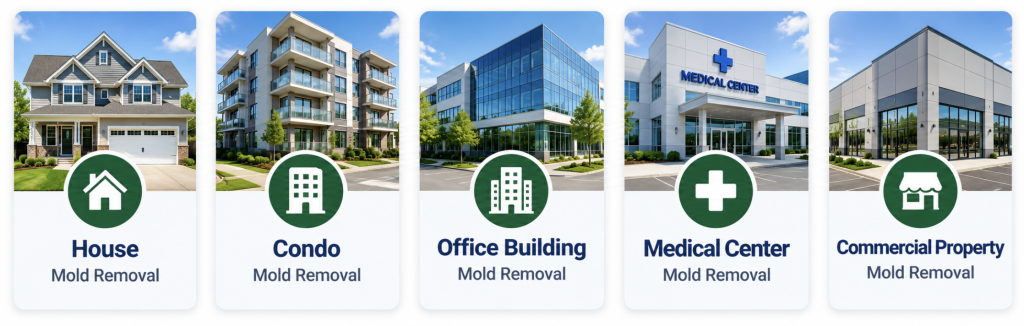
Our services are suitable for single-family homes, townhomes, apartments, condos, offices, schools, churches, medical facilities, retail properties, and industrial buildings. A City Center apartment, an Alderwood commercial property, and a South Lynnwood home can have very different access and building conditions. We keep the recommendations tied to the affected area, the moisture source, and the condition of the materials. For a closer look at containment, HEPA air scrubbers, cleanup, removal, timing, and reconstruction boundaries, visit our mold removal service page.
Containment means using plastic walls or barriers to keep mold dust from spreading into clean areas. HEPA air scrubbers filter fine particles from the work-zone air during cleanup. Affected porous materials are removed when they cannot be reliably cleaned and dried. We keep this page focused on the big picture, while the service page explains what a typical project may involve.
What makes Lynnwood moisture problems different?
Lynnwood has a temperate marine climate with wetter fall and winter conditions and comparatively drier summers. Prolonged rain can expose weak roof details, clogged drainage, short downspouts, and exterior openings. Localized flooding and stormwater concerns also matter near drainage features such as Scriber Creek and Scriber Lake. Address-level flood information should be checked through Snohomish County and FEMA resources rather than assumed from a mailing address.
Building type also changes the way moisture moves. Older multifamily housing exists alongside newer apartments and mixed-use development near Lynnwood City Center and Alderwood. Crawl spaces, below-grade areas, shared walls, and concealed plumbing all deserve different inspection questions. If a property uses a Lynnwood mailing address outside the incorporated city, confirm the jurisdiction before relying on city permit or public-works information.
Why property owners choose Lynnwood Mold Remediation Pros
Our company is IICRC certified and BBB registered. Those are the verified credentials we use when describing our business. We work with residential and commercial property owners who need a clear plan for a moisture-related mold concern. We do not promise a fixed result before the affected materials and moisture source are understood.
We also encourage property owners to keep useful records. Save photos of visible damage, note when the moisture was first noticed, and record any roof, plumbing, drainage, or ventilation work. Renters should notify the landlord or property manager in writing and keep copies of that communication. For questions about signs, testing, identification, and limits on do-it-yourself cleanup, use our mold warning signs guide.
Where we provide mold remediation
We serve Lynnwood and nearby communities in South Snohomish County. Our service area includes Edmonds, Mountlake Terrace, Brier, and Everett. Some Lynnwood postal addresses are outside the city limits in unincorporated Snohomish County, so the mailing address does not always identify the governing jurisdiction. That distinction can affect flood resources, permits, and building records.
We work with homeowners, landlords, property managers, and business owners across varied settings. Commercial work may involve offices, retail spaces, schools, churches, medical facilities, and light-industrial properties along major corridors. Residential work may involve a bathroom leak, damp crawl space, attic intrusion, or mold inside a wall. We explain what we can address and where reconstruction or other specialty work falls outside remediation.
What to do before help arrives
Stop the water source if it is safe to do so, such as turning off a supply valve or shutting down a leaking appliance. Keep people away from visibly damaged materials and avoid sanding, scraping, or painting over mold. Do not run fans that push air from a contaminated area into the rest of the building. Photograph the area, protect nearby belongings from further water, and arrange for an assessment when the problem is larger than a small surface spot.
Health questions should go to a doctor or a public-health agency. The Washington State Department of Health mold guidance explains why moisture control, ventilation, drying, and professional help matter for larger or hidden problems. The Snohomish County Health Department also provides local mold and air-quality information. These resources can help you separate urgent moisture control from questions that require medical advice.
If you want to discuss a mold concern, (425) 699-6271 is the number to call. We will ask what you noticed, where the moisture occurred, and whether the source is still active. Have photos and any leak or repair details nearby if available. If water is still flowing, shut it off safely before calling.
Frequently Asked Questions
Can mold return after cleanup?
Mold can return when the moisture source remains active. Common sources include leaks, condensation, poor ventilation, and damp crawl-space conditions. Cleaning visible growth without correcting the moisture problem leaves the building vulnerable to recurrence. Keep gutters, downspouts, exhaust fans, plumbing, and affected building areas under regular observation.
Do you work on commercial properties in Lynnwood?
Yes, our service scope includes commercial property types such as offices, retail spaces, schools, churches, medical facilities, and industrial buildings. Commercial projects often require attention to occupant movement, shared walls, equipment, and access. The affected area and building layout guide the work plan. Property managers should also preserve leak records and notify the appropriate building contacts.
Should I check whether a Lynnwood address is inside city limits?
Yes, confirm the jurisdiction when permits, drainage concerns, or flood resources are involved. Some addresses use Lynnwood as a mailing city while sitting outside the incorporated city. City and county departments may provide different records or guidance. Parcel-level flood information is especially important near low-lying areas and local drainage corridors.
When should I avoid do-it-yourself mold cleanup?
Avoid DIY cleanup when growth is widespread, hidden, linked to sewage, or connected to a continuing leak. Stop if the work would disturb large amounts of drywall, insulation, flooring, or other porous materials. People with health concerns should ask a medical professional before handling moldy materials. For older buildings, check whether demolition could disturb asbestos-containing materials and use Washington Labor and Industries resources for guidance.